
Not All Shade Is Created Equal
It is easy to assume that any shelter blocking sunlight qualifies as adequate shade. The reality is more nuanced. A beach tent with shade that genuinely protects against UV radiation must be constructed from fabric with a certified UPF rating rather than simple weave density. The sun's ultraviolet rays penetrate many loosely woven materials far more effectively than visible light does, meaning a shelter that looks dark inside can still allow a damaging amount of UV exposure. When selecting a beach tent with shade for your family, the UPF 50+ certification is the single most important number to verify before anything else.
How UV Ratings Actually Work
UPF stands for Ultraviolet Protection Factor, and it works on the same principle as SPF in sunscreen, the number indicates how much UV radiation the fabric allows through relative to unprotected skin. A UPF 50 rating means that approximately one-fiftieth of UV rays reach the skin, blocking 98 percent of exposure. For comparison, a plain white cotton t-shirt has a UPF of around 5, and a dry beach umbrella with no specific UV treatment may offer even less. Certified outdoor shelter fabrics achieve their rating through a combination of tight weave, UV-absorbing dye treatment, and material composition, usually polyester or nylon rather than cotton.
The Case for Full-Enclosure Designs
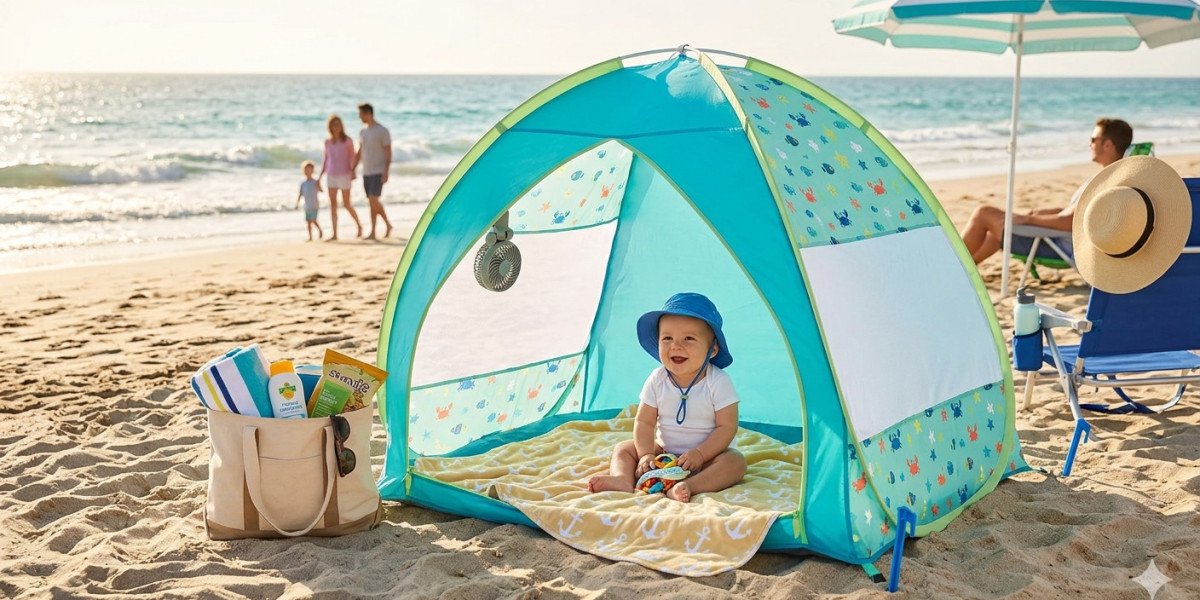
Open beach canopies shade the area directly beneath but leave the sides fully exposed to reflected UV from the sand and water, surfaces that can bounce back a significant proportion of ultraviolet radiation. A fully enclosed tent with solid side walls eliminates this reflected exposure and provides meaningful protection even when the sun is at a low angle early or late in the day. Side ventilation panels with UV-treated mesh maintain airflow without sacrificing protection, making enclosed designs far more effective for young children and fair-skinned family members.
Portability Without Compromise
Substantial UV protection used to mean substantial weight. Modern coated fabrics and flexible frame systems have changed that calculation significantly. Today's best-performing beach shelters weigh under four pounds, fold into a circular pack the size of a large frisbee, and stand up in under a minute. For trips where you are already juggling a foldable tent for beach alongside towels, snacks, and swim gear, the pack size and carry bag design matter almost as much as the tent's performance. Look for a bag with both a shoulder strap and a carry handle, and check that the tent folds down reliably after every use rather than requiring a two-person wrestling match to repack.
Placement Strategy for Maximum Protection
Even the best UV-rated tent delivers less protection if it is positioned poorly. Face the closed panel toward the sun's strongest angle, typically south-facing between 10am and 3pm in the Northern Hemisphere, and orient any mesh panels to catch prevailing breezes for airflow. Angle the entrance to sit in self-created shade so children entering and exiting are not stepping directly into full sunlight. On days when cloud cover is light rather than heavy, UV exposure can be even higher than on a clear day because UV rays scatter through thin cloud more effectively than visible light does, exactly the kind of condition where a certified shelter makes the biggest practical difference.
Frequently Asked Questions
Does a beach tent with shade protect against UV even on cloudy days?
Yes. UV rays penetrate cloud cover effectively, and thin cloud can actually diffuse UV across a wider sky area. A UPF 50+ rated tent provides consistent protection regardless of cloud conditions.
How long does the UPF rating last on beach tent fabric?
With proper care, rinsing with fresh water after beach use, air-drying before storage, and avoiding prolonged unnecessary sun exposure, a quality UPF-treated fabric should maintain its rating for several seasons. Fading and fabric brittleness are signs the coating is degrading.
Can I add UV protection to a tent that does not have a UPF rating?
UV-blocking fabric sprays exist but are not a reliable substitute for a purpose-rated canopy. If UV protection is a priority, invest in a certified tent rather than treating an uncertified one.
Is a beach tent with shade also windproof?
Enclosed beach tents provide significantly more wind protection than open canopies. Ground stakes and sand-pocket anchors improve stability further, but no tent is fully windproof in extremely gusty conditions.